Transparency for Tomorrow: Decoding the Sustainability Reporting Landscape
/ Decode the Landscape. Connect the Instruments. Choose with Confidence.
Course Description
Navigating the growing range of sustainability reporting standards, frameworks, regulations and related instruments can be complex. This live, instructor-led course provides a structured overview of the reporting landscape—covering the GRI Standards, European Sustainability Reporting Standards (ESRS), IFRS Sustainability Disclosure Standards, selected U.S. climate disclosure laws, and the TCFD and TNFD recommendations, together with selected additional initiatives—to help participants understand their purpose, scope and materiality perspectives, compare how they differ and where they align, and determine how they can be used together to support an organisation’s reporting goals.
 English or Bosnian/Croatian/Serbian
Live Online
Face-to-Face
Tailored
Learning Outcomes
By the end of the course, participants will be able to:
explain current trends in the sustainability reporting landscape, including the concept of double materiality;
name the key reporting instruments shaping the landscape and describe their purpose;
describe the main similarities and differences between these instruments and illustrate how they are aligned;
summarise how the main reporting instruments can be used in conjunction and justify why an organisation may choose to do so; and
identify which reporting instruments are best suited to an organisation’s reporting goals.
Course
Structure
The workshop combines licensed GRI content with presentations, guided comparisons, practical examples, reflection activities, knowledge checks and group discussions, helping participants turn a complex reporting landscape into a clearer basis for organisational decision-making.
Introduction
- Welcome, orientation and learning objectives
- Overview of the sustainability reporting landscape
- Key questions addressed throughout the course
Part 1:
State of Play
- The growth and evolving role of sustainability reporting
- The relationship between sustainability and financial reporting
- Voluntary and mandatory reporting requirements
- Differences in the scope and quality of sustainability disclosures
- Internal controls, external assurance and reporting credibility
Part 2:
Key Concepts
- Impact reporting and sustainability-related financial reporting
- The two perspectives of double materiality
- How materiality perspectives influence reporting choices
- Differences between standards and frameworks
- The role of indices, rankings, ratings and certifications
Part 3:
Meet the Main Players
- The GRI Sustainability Reporting Standards
- The European Sustainability Reporting Standards
- The IFRS Sustainability Disclosure Standards
- Selected U.S. climate disclosure laws
- The TCFD and TNFD recommendations
- The purpose, issuer, scope and principal audience of each instrument
- Why different reporting instruments exist and how alignment can reduce reporting burden
Part 4:
A Deeper Dive into the Reporting Instruments
- Comparing the materiality perspectives and disclosure focus of the main instruments
- Key similarities, differences and areas of alignment
- How the principal instruments connect with the GRI Standards
- Using impact and sustainability-related financial reporting instruments together
- Interoperability, harmonisation and the use of multiple instruments
- Selected additional initiatives, including the UNCTAD Global Core Indicators, UN Global Compact and WEF IBC Common Metrics
Part 5:
Where Do You Go from Here?
- Future trends in sustainability reporting
- Consolidation, convergence and continued differences in reporting purpose
- Understanding stakeholder and regulatory information needs
- Selecting instruments according to organisational reporting objectives
- Developing a coherent sustainability reporting strategy
Wrap-Up
- Summary of key concepts
- Reflection, Q&A and next steps
Together, the course moves from understanding current reporting trends and materiality concepts to comparing the principal instruments, examining how they can work together and selecting an approach aligned with organisational needs and reporting goals.
Who
Should Attend
This course is particularly suitable for:
sustainability reporting practitioners and ESG professionals;
consultants and professional advisers supporting reporting organisations;
management boards, executives and decision-makers with reporting oversight;
finance, risk, compliance, strategy and communications professionals involved in sustainability reporting; and
professionals responsible for comparing, selecting or aligning multiple reporting instruments.
The course is suitable both for newcomers seeking a structured overview and for experienced practitioners who need to understand how different instruments interact and support different information needs.
Course
Information
Duration:
1 day
Language:
English or
Bosnian / Croatian / Serbian
Delivery Options:
Scheduled Live Online, Face-to-Face at the University of Sarajevo, or tailored in-house delivery worldwide
Prerequisites:
No specific prior knowledge is required
Course Materials:
Applicable licensed course materials and a dedicated participant booklet
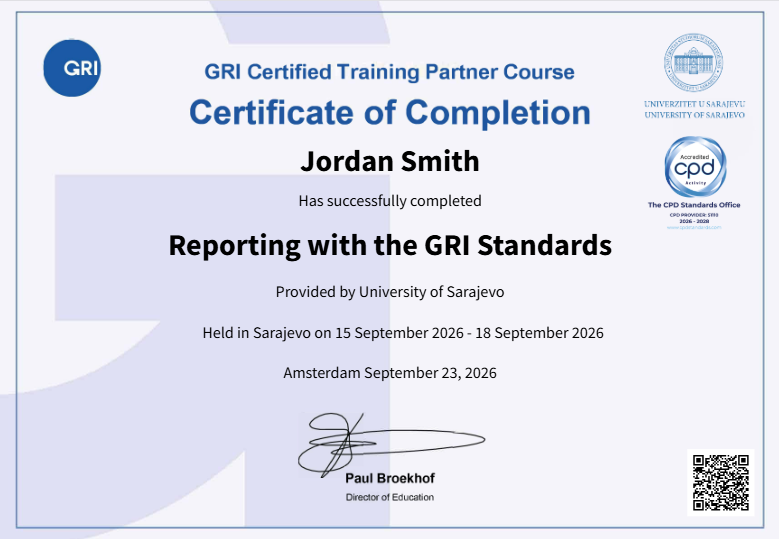
️Approved CPD Hours:
4.5 CPD Hours
Professional Certification Pathway:
This course is one of four required courses within the GRI Professional Certification Programme
Group & In-House Options

The same fee applies to scheduled Live Online delivery and Face-to-Face training at the University of Sarajevo.

Custom pricing for larger groups, institutional programmes and donor-funded initiatives

Tailored in-house training is available worldwide and quoted separately based on group size, location and logistics
Meet the
GRI Training Team
Ready to Navigate the Reporting Landscape with Confidence?
Build the clarity needed to compare reporting instruments, understand how they work together and make informed choices for your organisation’s sustainability reporting strategy.
 Follow Us